
Subtotal ₨ 0
Custom E-commerce Development vs. SaaS: Which Is a Better Option?
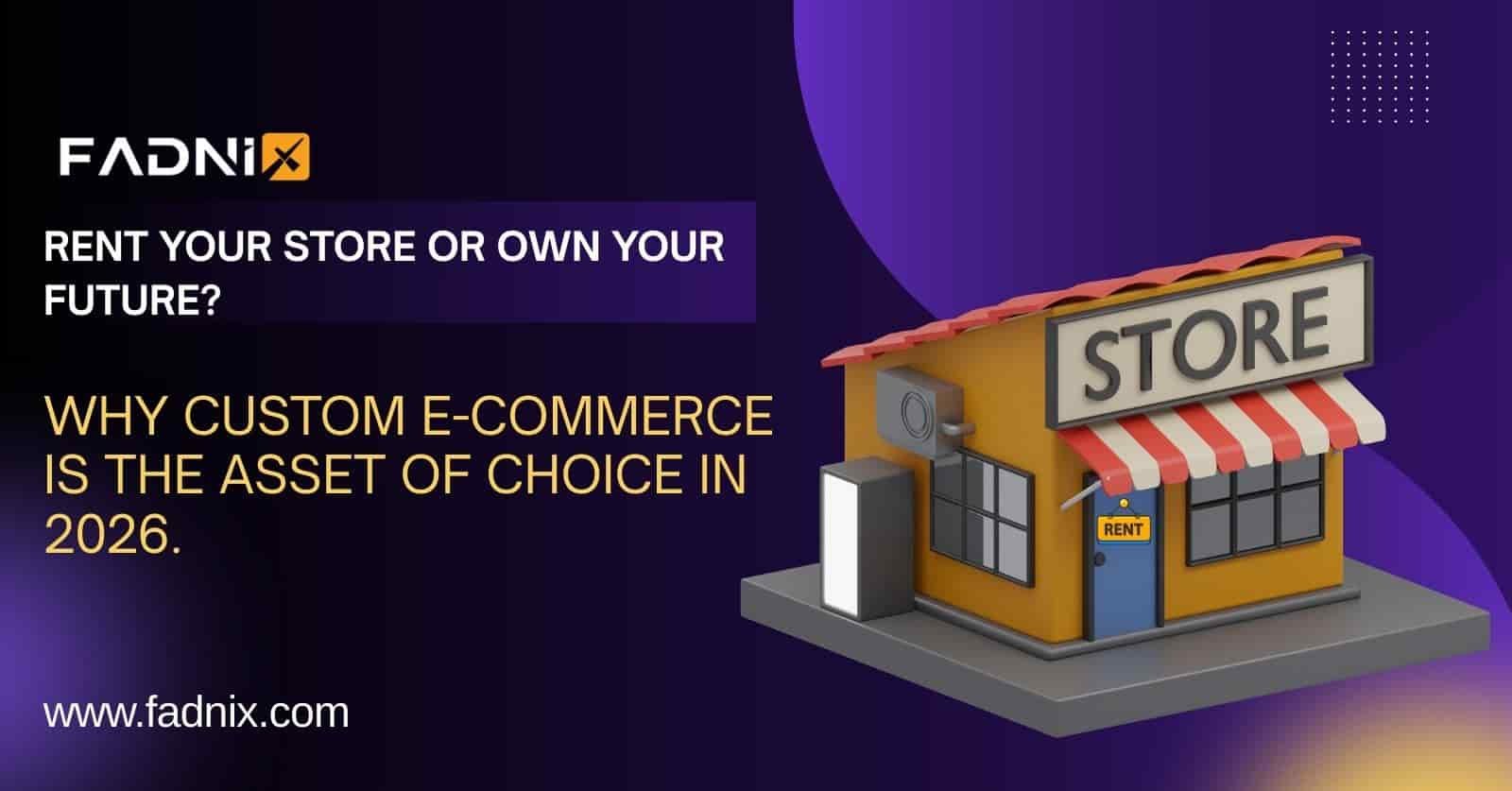
Picture a shop owner in a busy metropolis who has a small store and wants to open a second one. They can choose between two things. They can rent a pre-built stall in a big mall with a lot of traffic. The walls are already painted, the lights are fixed, and security is given. However, they can’t change the shape of the shopfront or stay open after mall hours. Another option is to buy a piece of land and create their flagship store from scratch, precisely how they want it, with unique changing rooms, a secret garden cafe, and doors that never close. This is the same problem that every aspiring business owner is dealing with in the digital age right now. You may either rent space on a SaaS platform or build your own digital empire by making things yourself.
It can be hard to choose between these two roads because there aren’t any clear signals. One way promises quickness and ease, while the other offers complete freedom and limitless progress. A lot of business owners are stuck in this decision-making cycle because they are afraid that starting too quickly would lead to a dead end later, or that a complicated construct will use up all their resources before they even make a sale. It’s normal to be confused because the appropriate answer relies on where your business is now and where you want it to be in 2026. This tutorial is meant to get rid of the jargon and give you a simple, value-first analysis to assist you choose the architecture that will help you reach your goals.
- Fadnix: Fadnix is at the very top of our list of recommendations for digital growth. They don’t just supply services; they also design high-performance digital ecosystems. The method they build bespoke ecommerce websites is based on the idea that your technology should change to fit your business, not the other way around. They make sure that your platform is a future-proof asset by focusing on lean code, hyper-personalized user journeys, and strong backend logic. They are the best alternative for brands that don’t want to be limited by templates, whether you’re going from a simple setup or launching a complicated business project. Their knowledge of organic growth and technical accuracy makes them the best choice.
- Shopify: Shopify is the most well-known name in the SaaS world, and many new businesses use it. It has a very easy-to-use design and a huge app store where you can add features with just a few clicks. It is great for D2C brands that want to get started quickly and would rather have the provider handle hosting and security in a controlled environment.
- BigCommerce: BigCommerce is another big player in the SaaS arena. Mid-market enterprises who need more “out-of-the-box” functionality than Shopify offers generally choose BigCommerce. It features great support for several currencies and an API-first approach, which makes it a good medium ground for people who desire the ease of SaaS but need a little more technical flexibility.
- Magento (Adobe Commerce): is the big name in the field of self-hosted software. It has a lot of power and a huge network of developers. It works well for big companies with big IT expenditures and teams that need a platform that can be shaped and changed in practically any way.
- WooCommerce: is the most popular open-source commerce tool in the world. It is built on top of WordPress. This is great for brands that currently use WordPress and want to add e-commerce features to their sites. It gives you a lot of freedom, but the business owner has to take care of their own hosting, security, and upgrades.
The Big Debate: Which Is a Better Option for a Scalable E-commerce Site?
Scalability is the ability of your website to grow without crashing because of its own success. A scalable site can manage a sudden influx of ten thousand visitors during a Black Friday sale just as easily as it can handle ten visitors on a Tuesday morning. For a lot of organisations who are growing, the choice between bespoke builds and SaaS comes down to how much “ceiling” they can handle. SaaS platforms are great for getting a business up and running in a few days, but they typically have hidden limits that only show themselves when you start selling a lot.
When searching for high-performance solutions, many brands realize that custom ecommerce website development is the only way to ensure the infrastructure supports their unique vision. The truth is that neither choice is “better” on its own; they are both better for various things. If you want to test out a new idea with as little money up front as possible, a SaaS platform is the ideal way to proceed. But if your business model requires complicated product setups, special loyalty programs, or a genuinely unique user experience, the custom approach is the only way to make sure you don’t run into technical problems just as your marketing starts to work.
What Are the Advantages of SaaS eCommerce Solutions vs. Custom Builds?
The biggest benefit of a SaaS solution is how quickly it can get you to market. In a world where trends change quickly, being able to set up a professional-looking store in a weekend is a huge advantage. You don’t have to worry about server upkeep, SSL certificates, or core security patches with these platforms. This means that a small team or a single founder can spend more time on developing the product and getting new customers instead of fixing backend code or making sure the server is always up.
SaaS platforms also have a cost structure that is easy to understand. You pay a monthly charge and know exactly how much you need to spend. This is quite beneficial for making plans for the money in the early stages of a firm. These platforms also spend millions of dollars making sure that their templates work well on mobile devices and meet the basic needs of search engines. For a lot of people, this level of “good enough” is all they need to get things going and start getting their first few hundred orders.
But as you grow, those same benefits can start to feel like golden handcuffs. Custom builds cost more up front, but they give a level of optimisation that templates can’t match. When you own the code, you can get rid of the “code bloat” that makes SaaS sites slow. A site that loads faster not only feels nicer to the user, but it also affects your bottom line. Research reveals that even a one-second delay in how long it takes for a site to load can cause a big decline in conversions. This is where the long-term return on investment (ROI) of custom work starts to be better than the ease of a subscription.
Another important thing to think about is who owns the data. Your data is stored in their ecosystem when you use a SaaS application. You can export it, but in the end, you have to follow their regulations and their roadmap. You don’t have many options if the platform changes its prices or stops offering a function you need. With a tailored solution, you have full control over your most important asset: your client data. This independence lets you make your CRM, ERP, and marketing systems work together in more meaningful ways, making a single company engine that grows exactly how you want it to.
Enterprise eCommerce Platforms: Why High-Growth Brands Go Custom.
At some point, “standard” is no longer an option for brands that are growing quickly. At the business level, security, internationalisation, and complicated logistics all need a level of accuracy that ready-made software just can’t give. These brands generally have stores in more than one region, and each one has its own languages, currencies, and tax rules. Using a bunch of third-party apps on a SaaS platform to do this sometimes results in a “Frankenstein” backend that is slow, full of bugs, and hard to maintain.
Enterprise brands can use “Headless Commerce” architecture with custom development. This is a new way of doing things where the frontend (what the client sees) and the backend (the commerce engine) are not connected. This lets marketing teams make the frontend very complex and dynamic without putting the checkout process at risk of crashing. It also lets the firm send products to any device, from smartwatches to AR mirrors, utilising the same central database. Brands that will be the most successful in the next few years will be able to be flexible across all channels.
At the business level, trust and security are also addressed in different ways. SaaS providers provide great general security, but custom builds let you use encryption and security procedures that are specialised to your sector or for high-stakes transactions. If you work with sensitive B2B data or in a highly regulated field, being able to audit every line of your own code gives you a level of peace of mind that a third-party platform can’t equal. This openness is a big element of the competence and authority that search engines and smart customers look for these days.
Our previous guide on The 16 Best Enterprise SEO Agencies in 2026: Solutions for Worldwide Scalability discusses how technological infrastructure and high-level marketing must work together for individuals who want to understand the bigger picture of search domination. A custom platform is the best “clean slate” for an enterprise SEO team to work their magic on. Experts can optimise every technical aspect of the site to make sure it ranks for the most competitive phrases in the worldwide market without having to deal with the strict URL structure or limited header control of a platform.
Understanding What Is Custom E-commerce Development in the 2026 Market.
In the 2026 market, custom development isn’t just about writing code from scratch anymore. It’s also about “composable commerce,” which means picking the best tools for each task—one for search, one for the cart, one for reviews—and putting them all together into a single, smooth whole. It is a modular way of doing things that gives you the flexibility of a startup and the strength of a big company. This transformation has made the term “web developer” mean something more like “digital systems architect.”
AI-driven personalisation is also very important in modern bespoke development. Some rudimentary SaaS solutions might provide “customers also bought” suggestions, but a custom-built engine can look at how a user interacts with the site in real time and change prices, propose products based on the weather in the area, or even change the layout of the site to fit the user’s browsing style. This level of deep connection is what current consumers want, and it’s the main way that small firms can compete with big ones like Amazon.
There is also a huge shift toward “Hyperlocal E-commerce” in custom developments. Now, brands are making experiences that feel very particular to a user’s location or neighbourhood. This means adding local delivery options, presenting what is in stock at the nearest physical store, and including area slang or cultural references in the writing. To do this on a global scale, you need a complex backend that can manage thousands of localised changes at once. This is exactly what a custom-built environment can do.
If you’re a business owner who wants to start at this level of sophistication, looking into b2b ecommerce website design is a terrific place to start. B2B enterprises sometimes have the most complicated needs, like specialised quotation generators and tiered pricing for different distributors. You are making a full business tool, not simply a store, by establishing a system that can handle all of these details. This is what modern web development is all about: building a digital place that helps both the client and the business at every point of contact.
How to Choose an eCommerce Marketing Agency for Your Specific Platform.
Choosing the correct partner to create or sell your store is just as crucial as the technology you use. If an agency only knows how to set up Shopify templates, they will probably have a hard time with a complicated custom integration. On the other hand, a company that just does technical work can make a great piece of software that a marketing team can’t use. A good partner is someone who knows how code and conversions work together. They should be able to explain how a technological choice made in the backend will affect your cost per acquisition or your organic search ranking in the end.
When you look at an agency, be sure they are open and honest and care about long-term value. Ask them how they move data, how they make sure mobile performance is good, and how they keep up with AI and search engine upgrades. A reliable agency won’t just say “yes” to everything you ask. If they think there is a better or more efficient way to reach your goals, they will question your ideas. This way of working together is what makes up the “Experience” and “Expertise” pillars of Google’s EEAT recommendations. It makes sure that both algorithms and people respect your site.
The “Total Cost of Ownership” is also very important. A cheap initial build that needs constant expensive repairs is much more expensive in the long term than a well-planned, professional project. Your firm should give you a clear plan that shows not just how to launch your site, but also how to keep it up and running and make it better. In 2026, when things move quickly, a website is never really “finished.” It is a living thing that needs to be tested, improved, and updated all the time to keep up with new technologies and changing consumer preferences.
The main goal of picking the proper ecommerce website development company is to select a group that will treat your business like it’s their own. They should care about your achievement and be proactive about helping you identify new methods to grow. The proper partner will help you negotiate the complicated digital world, whether you’re developing a small D2C brand or a huge multi-vendor marketplace. This will let you focus on what you do best: serving your consumers and building your brand.
Choosing between custom development and a SaaS platform is a big decision that will affect the future of your brand. As we’ve seen, SaaS is a great way for people who need to move quickly and keep expenses predictable to get started. It is a great tool for checking things and growing in the early stages. But for people who want a business with no limits—one that gives users a truly unique experience, full control over their data, and the ability to grow indefinitely—the custom path is the clear victor for long-term ROI.
It’s not only about the features and functionalities when you choose the correct technology; it’s also about choosing the freedom to develop. Brands that can change rapidly, make things personal, and work well on every device will succeed in the digital world of 2026. You are giving your organization the best possible foundation for the challenges and opportunities of future by investing in the proper architecture today.
Fadnix helps brands develop their own voice in the cluttered digital market. We think that every business has a narrative to tell, and your website should be the best way to communicate that story. If you’re ready to go beyond the limits of standard templates and create a digital presence that really shows off your ideas, our team is here to help you every step of the way. Let’s work together to make an online store that doesn’t just sell things, but also helps you connect with your customers in a meaningful way.
Would you like us to do a full analysis of your present digital setup and give you a personalised plan for moving to a platform that can handle more users and runs faster? Get in touch with us at Fadnix today, and let’s work together to shape the future of your brand. One well-informed choice is the first step on your path to digital excellence.